Bold Trouser Styling for the Fashion-Forward
Most outfits are built top-down: interesting shirt, safe trousers. Flip it. Put the statement at the bottom, keep everything above it calm, and you get a look that’s directional without trying — and considerably easier to pull off than it sounds.
Quick Answer: Bold trousers work when they’re the only statement in the outfit. Pair voluminous or vivid trousers with a fitted, tucked top and a clean shoe, then choose one mood: tonal (top matched to trouser for an elongating column) or contrast (a complementary shade for a graphic look). The proportion rule does most of the work — volume below means fitted above, and vice versa.

Why Start an Outfit From the Trousers?
Because bottoms occupy more visual area than tops do, and a statement placed there anchors the whole look instead of floating on it.
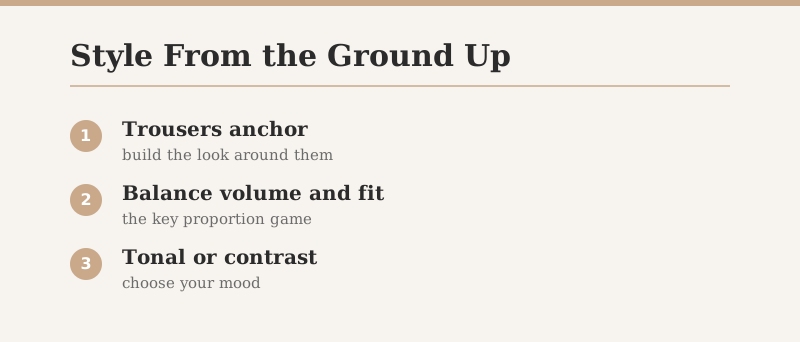
When the trousers are the loudest element, the outfit has a stable base. A dramatic top over plain trousers can read as top-heavy — all the interest above the waist, nothing supporting it. Reverse it and the proportions settle.
The practical version: bold trouser, simple tucked top, clean shoe. That’s a complete outfit and it takes about thirty seconds of thought. Everything above the waist is playing a supporting role, and that’s the point.
It’s also a genuinely refreshing way to get dressed, since most people default to safe bottoms and then hunt for an interesting top. Working upward from a strong base solves the outfit in the opposite direction.
How Do You Balance Volume and Fit?
This is the single most important skill for statement bottoms, and it’s one rule with two directions.
Volume below → fitted above. Wide-leg, palazzo, or pleated trousers need something slim on top. A fitted knit, a tucked tee, a slim bodysuit. Volume on volume erases the waist entirely and the whole silhouette collapses into a rectangle.
Sleek below → volume above. A narrow, striking trouser — a vivid cigarette pant, a leather straight-leg — can carry an oversized shirt, a boxy blazer, or a voluminous sleeve.
The tuck decides the waist. With a wide-leg trouser, a full or half tuck marks where your waist is, which is what stops the volume from swallowing you. An untucked top over a wide leg is one continuous column of fabric with no defined point.
Specific pairings that work:
- High-waisted wide-leg + fitted knit, fully tucked
- Pleated volume trouser + slim tank + open long blazer
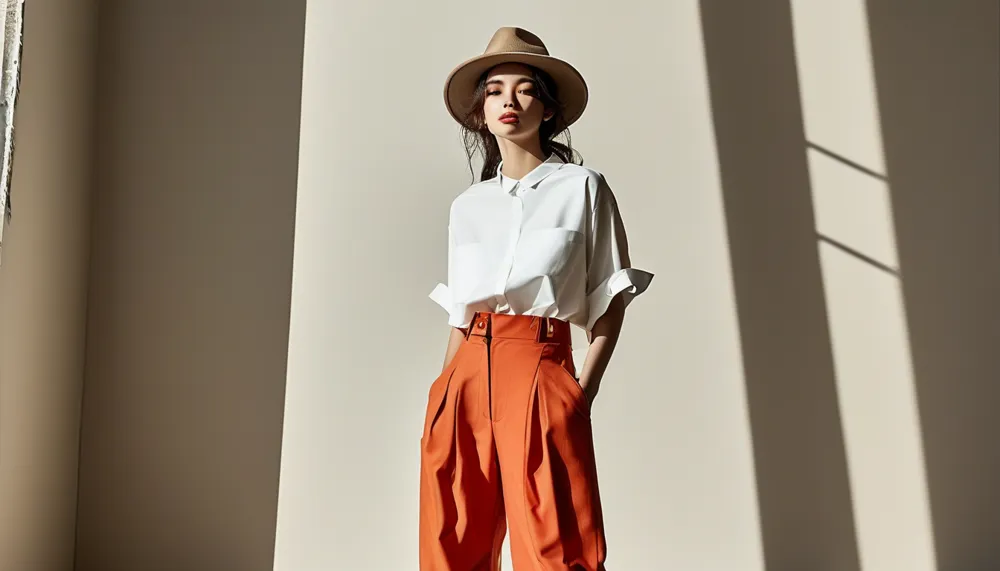
- Bright cigarette pant + oversized poplin shirt, half-tucked
- Leather straight-leg + chunky knit, front-tucked
Should You Go Tonal or Contrast?
Both read as considered. They just say different things.
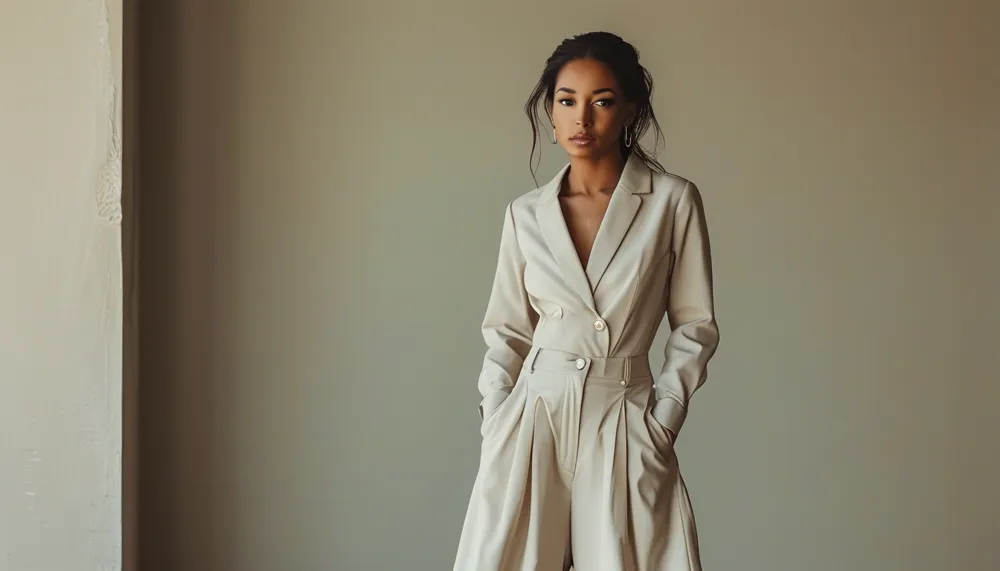
Tonal means matching your top to the trouser, or staying within one shade family. The result is an elongating column of color that reads sophisticated and quietly expensive. A cobalt trouser with a cobalt knit is more striking than either piece alone, and it makes the wearer look taller.
Contrast means a deliberately different shade above — complementary, or a hard neutral against a saturated bottom. Sharper, more graphic, more obviously a choice.
When to pick which:
- Tonal for events, work, and anywhere you want to look polished rather than experimental
- Contrast for daytime, weekends, and when the trouser has a print or texture worth setting off
- Tonal if you want apparent height; the unbroken line does it
- Contrast if the trousers are already very loud, since a neutral above gives the eye somewhere to rest
Neither is wrong. Tonal whispers sophistication; contrast announces confidence.

5 Mistakes Everyone Makes
- Adding a second statement on top. A printed blouse over a bold trouser puts two things in competition and neither wins. One statement, and it’s already on your legs.
- Wearing the wrong hem length. Wide-leg trousers should just brush the top of the shoe — a break at the ankle kills the line, and a puddling hem looks unfinished. Hem them to the shoes you’ll actually wear.
- Skipping the tuck. It’s the cheapest, fastest way to define a waist, and untucked over wide-leg is where most bold-trouser outfits go flat.
- Choosing a fussy shoe. With a strong trouser, the shoe should be clean and simple. A sculptural heel works; an embellished sandal fights.
- Buying them a size up for comfort. Wide-leg trousers already have volume built in. Sizing up loosens the waist, which is the one place they need to be precise.
The second mistake is the most common by far, because hemming feels optional right up until you see the same trousers hemmed correctly.
How Do You Finish the Look?
The details are what separate “directional” from “accidental.”
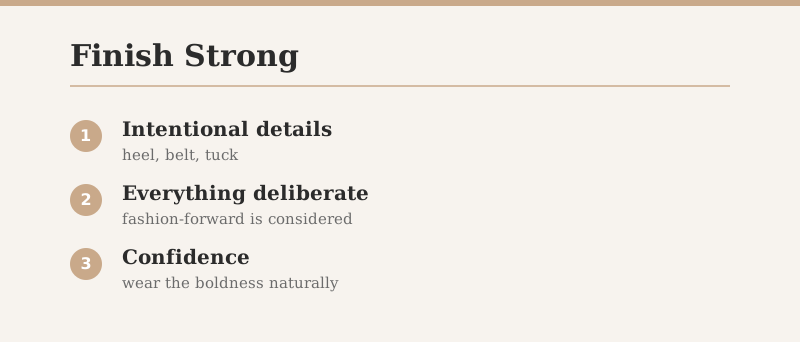
- The shoe: a sculptural heel, a clean loafer, or a minimal boot. The heel doesn’t need height — it needs a shape that relates to the trouser’s line
- The belt: a considered belt at the waist reinforces the definition the tuck created, and it’s a good place for a hardware detail
- The hem decision: cuff it deliberately or let it graze the floor. What doesn’t work is the accidental in-between
- One accessory: a structured bag or a single earring. The finishing note, not a second statement
Every element should look decided, down to whether the sleeves are pushed. The fashion-forward look is really just the well-considered look, all the way down.
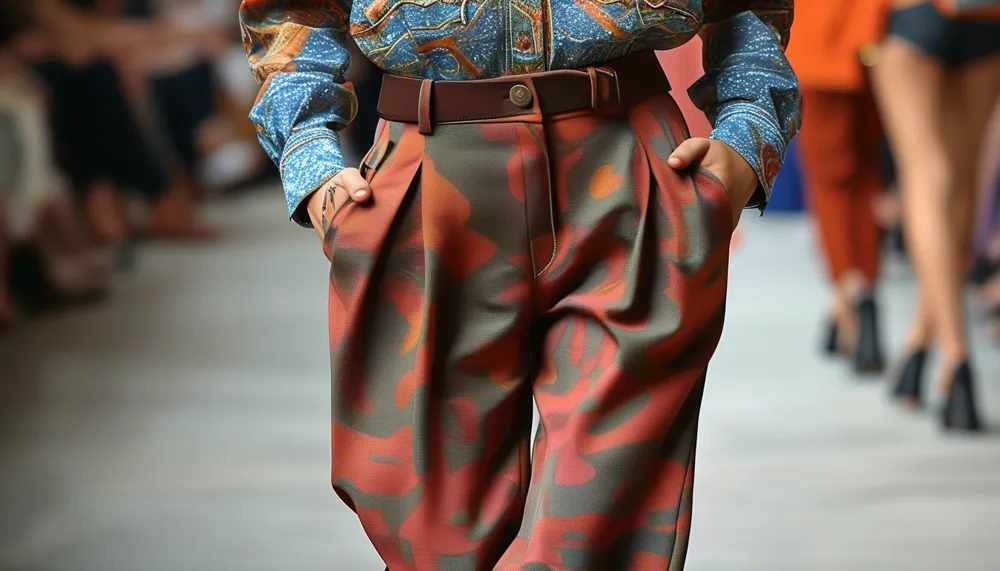
For an everyday version that carries the same proportions with less commitment, a high waist wide leg yoga pant in a solid tonal shade gives you the volume-below silhouette in something you can wear for eight hours — same styling rules, considerably lower stakes.

FAQ
Do wide-leg trousers work if I’m petite?
Yes, with two adjustments: a genuinely high rise, and a hem shortened to just brush your shoe in the heel you’ll wear. The high waist plus the unbroken vertical line actually adds apparent height rather than reducing it.
What top goes with a brightly colored trouser?
A plain fitted top in either a hard neutral (white, black, cream) or the same color family as the trouser. Both read as intentional; a printed or contrasting-bright top puts two statements in competition.
Can I wear bold trousers to the office?
Tonal styling is the way in. Match the top to the trouser, add a structured blazer in the same family, and keep the shoe simple — the outfit reads as a considered suit rather than as a statement piece.
TL;DR:
- Build from the bottom up: bold trouser, simple tucked top, clean shoe
- Volume below means fitted above; the tuck is what defines the waist
- Tonal for polish and apparent height, contrast for graphic impact
- Hem to just brush the shoe you’ll actually wear — this matters more than anything else
- One statement only; a printed top cancels a bold trouser
- Don’t size up for comfort, since the waist is the one place that needs precision
Bold trousers are a foundation worth building on. Let them anchor the look, balance volume against fit, pick tonal or contrast deliberately, and finish with intention — directional dressing that starts strong exactly where most outfits play it safe.
See It in Motion
Seen here: High Waist Wide Leg Yoga Pants with Pockets — shop it on bubblelime.com
Keep Reading
This article is for general styling and informational purposes only. Trends, sizing, availability and pricing may vary by brand and season.