Wide-Leg Trousers: The Proportion and Tucking Rules That Make Them Work
Wide-leg trousers are effortlessly chic when the proportions work — and shapeless or overwhelming when they don’t. The whole game is balancing volume with a fitted top, the right tuck and the right shoe. The wide-leg edit on the rules: the proportion case, the tucking rules and the notes by body and shoe.
The Wide-Leg-Proportion Case
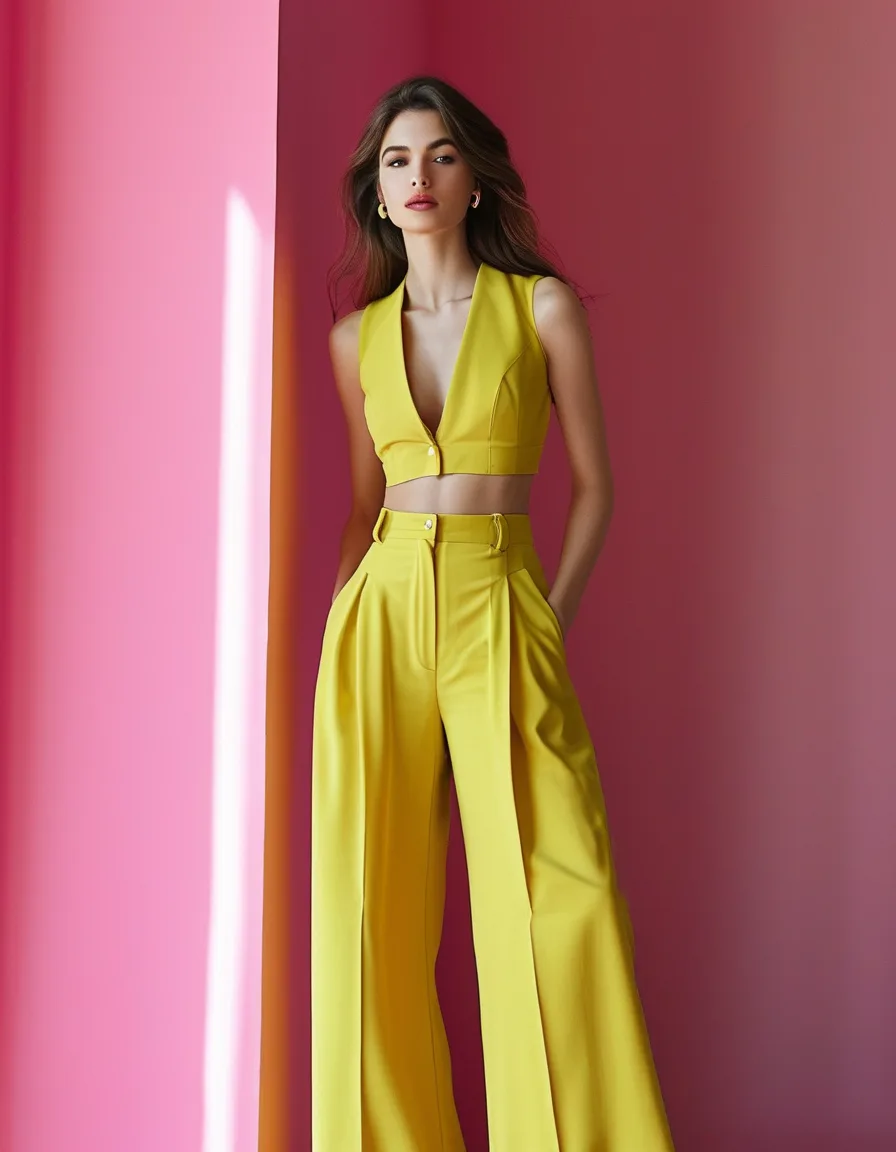
Why proportion makes wide-leg work: the volume-needs-balance (the wide-leg’s volume needing a fitted-top counterweight — the the-balance-rule; the style-wide-leg-pants foundation), the shapeless-when-unbalanced (the wide-leg overwhelming without proportion — the the-risk; the volume-plus-volume-fails), the the-fitted-top-rule (the fitted or tucked top balancing the wide leg — the the-key-formula; the proportion-play), the elongating-when-right (the right proportion lengthening the line — the flattering-wide-leg; the leg-lengthening), and the reframe (the wide-leg as a proportion-and-balance piece, fitted-top-and-tuck required).
The Proportion-and-Tuck Rules
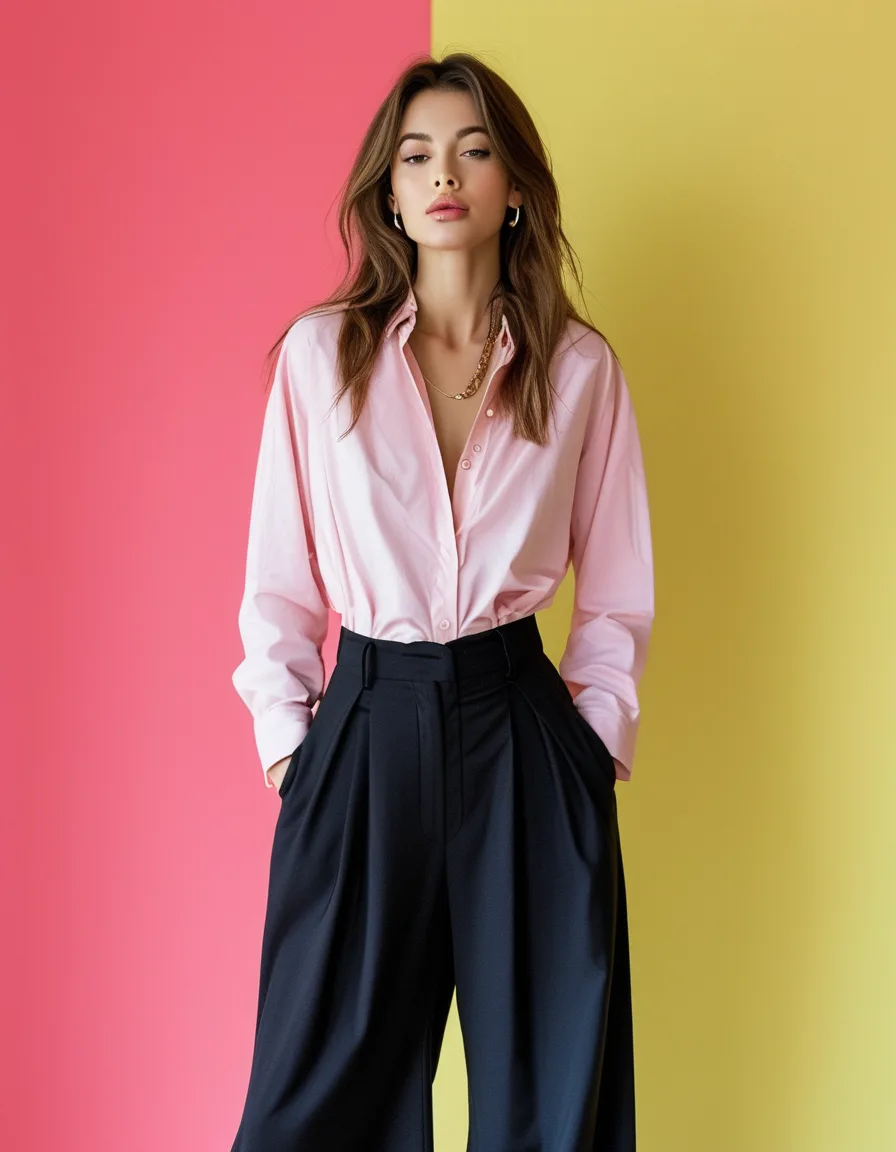
The proportion and tuck rules: the fitted-or-tucked-top (the fitted top or tucked-in top with the wide leg — the balance-the-volume; the the-rule), the the-tuck-defines-the-waist (the tuck creating the waist-and-proportion from the waist-definition logic — the define-and-balance; the show-the-waist), the the-high-waist-lengthens (the high-waisted wide-leg elongating the leg — the leg-line; the high-waist-power), the the-half-tuck-option (the half-tuck for effortless proportion — the relaxed-balance), the the-crop-top-or-fitted-knit (the cropped or fitted top balancing the volume — the proportion-partner), the the-length-and-hem (the wide-leg hemmed to the right length from the wide-leg-trousers chapter — the pooling-or-perfect; the hem-matters), and the the-tonal-lengthening (the tonal wide-leg-and-top for the long line — the monochrome-elongating).
The By-Body-and-Shoe Notes
Wide-leg by body and shoe: the the-shoe-pairing (the shoe matched to the wide-leg from the wide-leg-shoe-pairings chapter — the heel-lengthens, flat-casual; the the-shoe-choice), the the-hem-and-shoe-length (the hem length working with the shoe — the show-or-cover; the proportion), the petite-wide-leg (the wide-leg for petite from the how-to-wear-wide-leg-petite chapter — the proportion-for-shorter; the high-waist-and-heel), the the-summer-fabrics (the wide-leg in summer fabrics from the wide-leg-summer-fabrics chapter — the seasonal-drape; the linen-and-flow), the work-wide-leg (the wide-leg for the office from the wide-leg-work-styling chapter — the professional-proportion), the the-statement-wide-leg (the bold wide-leg from the statement-wide-leg chapter — the volume-as-statement), and the frame (wide-leg as a proportion-balanced, fitted-top-and-tucked, shoe-and-hem-matched piece — the rules that make wide-leg work. Balance wide-leg volume with a fitted or tucked top, define the waist with a high waist and tuck, hem it to the right length, and pair it with the right shoe (heel to lengthen, flat for casual): the proportion and tucking rules that make wide-leg trousers work.
Wide-leg trousers are effortlessly chic when the proportions work — and shapeless or overwhelming when they don’t. The whole game is balance: pair the volume with a FITTED or tucked top (never volume-on-volume), let the tuck define the waist, and choose a high waist to elongate the leg. Hem them to the right length, and pair with the right shoe (a heel lengthens, a flat reads casual) — going tonal for the longest line. Adapt for petite (high waist and heel) and season (summer fabrics that drape). The proportion and tucking rules that make wide-leg work.
See It in Motion
Seen here: High Waist Drawstring Wide Leg Yoga Pants with Pockets — shop it on bubblelime.com
Keep Reading
This article is for general styling and informational purposes only. Trends, sizing, availability and pricing may vary by brand and season.