The Rise Decides Whether Wide-Leg Trousers Read Chic or Costume
Quick Answer: The rise decides whether wide-leg trousers look chic or costumey — not the leg width. A high rise sitting at your natural waist (the narrowest point of your torso) anchors all that fabric so the volume flows from a crisp line. A low or vague rise gives the volume nothing to push against, and it swamps you. Choose wide-legs by the rise first, width second.
Everyone shopping wide-leg trousers asks the same two questions: how wide, and which shoe goes underneath?
Both are secondary. The detail that actually decides the outcome is happening at the top of the garment — at the rise and the waistband. Get that right and the volume below reads as elegant. Get it wrong and the exact same trousers overwhelm you.
Here’s why the rise is the pivot point, and how to use it.

Why Does the Rise Matter More Than the Width?
A wide-leg trouser carries a lot of fabric — often two to three times the leg circumference of a straight-cut pant. That volume needs an anchor at the top, or it simply engulfs you.
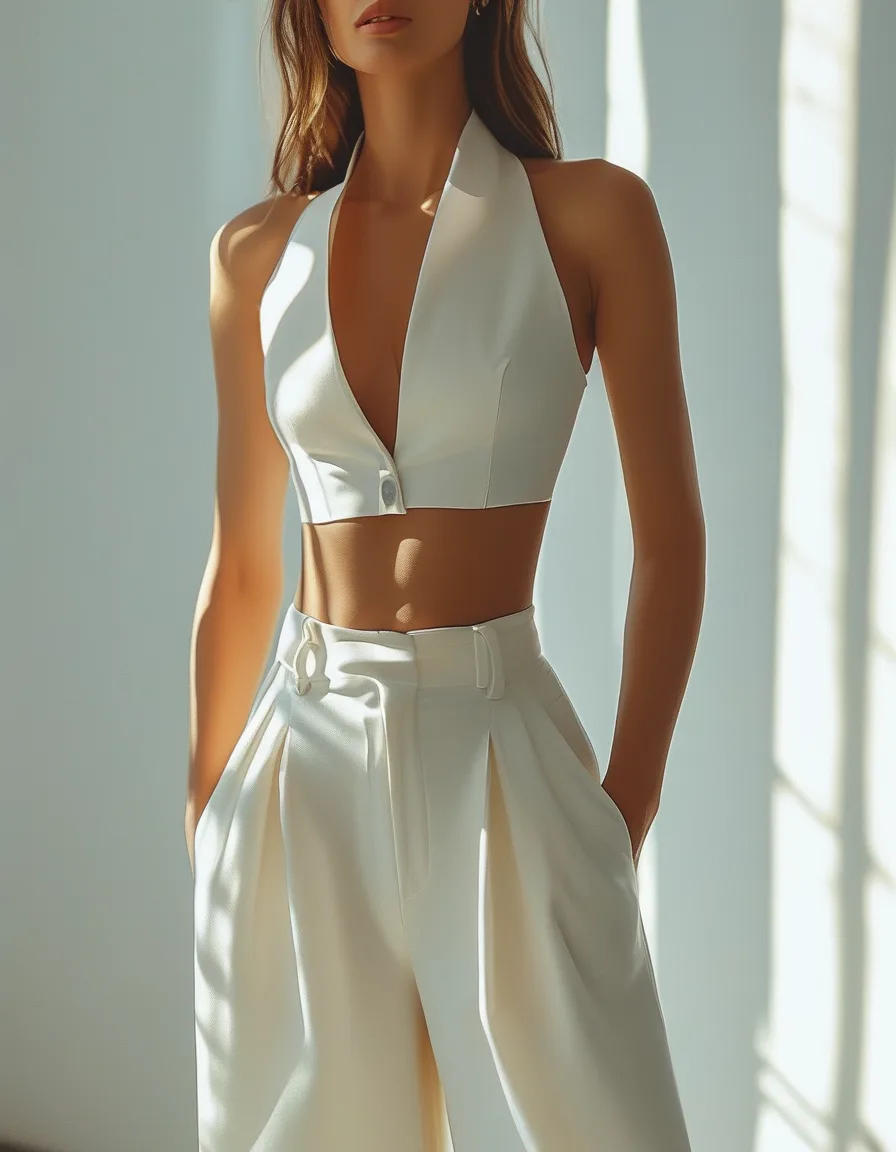
The rise provides that anchor. A high or well-placed rise sits at your natural waist, the narrowest point of your torso, defining it clearly so the wide leg flows out from an established line.
A low or vague rise gives the volume nothing to push against. It starts wide at the hip and there’s no visual contrast anywhere — just fabric from the ribcage down. Same trousers, same fabric, completely different result.
The width below is only as flattering as the definition above it.

Where Should the Waistband Actually Sit?
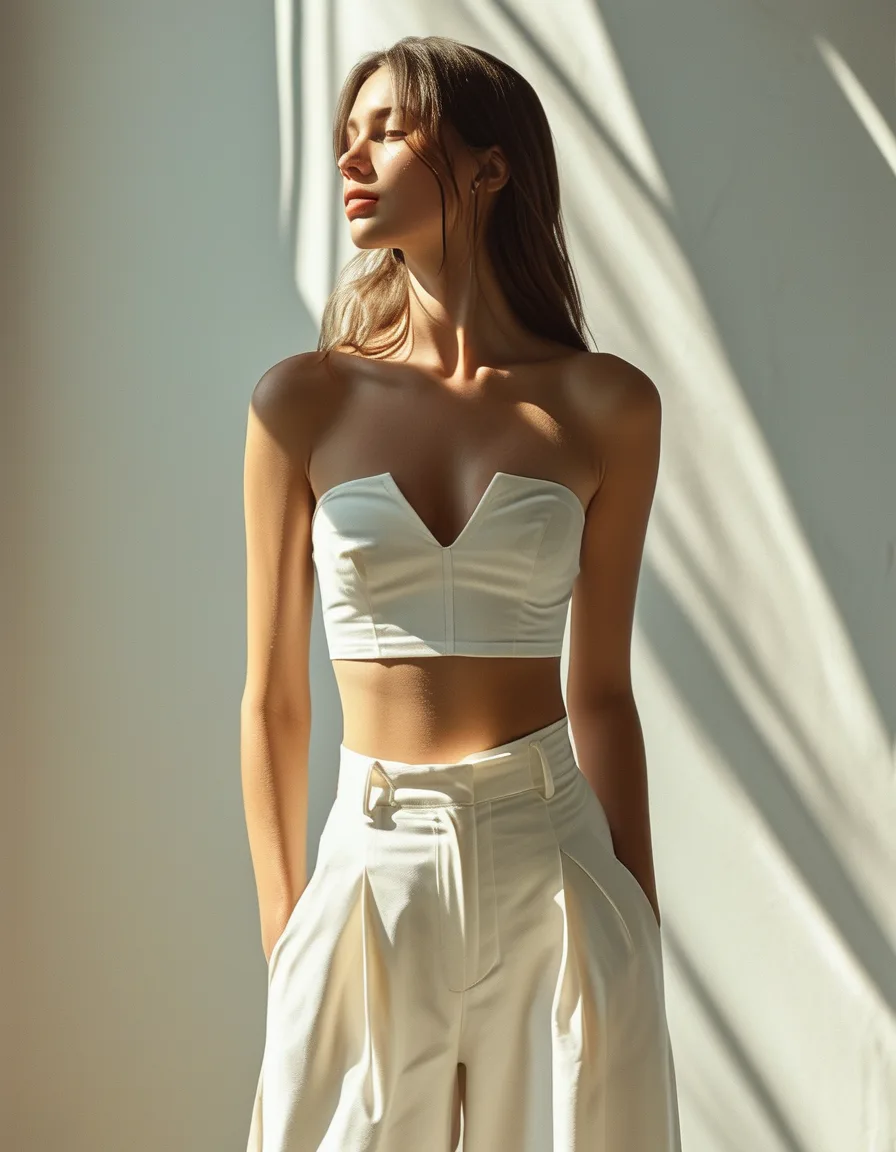
At your true waist — usually about 1–2 inches above your belly button, the spot where your torso naturally creases when you bend sideways.
Sitting there, the waistband creates the long-leg, balanced silhouette that makes wide-legs elongating, because it marks where your legs visually begin high on the torso. On most bodies that’s a rise measurement of roughly 11–13 inches; mid-rise trousers typically run 9–10.
Drop the waistband lower and you shorten the leg line and lengthen the torso, which fights against everything the wide leg is trying to do. This is why the same trouser looks statuesque in one rise and shapeless in another.
The waistband isn’t a minor detail. It’s the line that organizes your entire proportion.
How Should the Waistband Fit?
Clean and close, with no gaping at the back. This is the single most common alteration on wide-leg trousers and it’s worth doing.
Two fit checks before you buy:
- The two-finger test. You should fit two flat fingers between the waistband and your back, no more. A gap you can fist means the trouser will slide down all day and lose its anchor.
- The hip-to-flare check. The trouser should be fitted through the hip and only widen from mid-thigh down. If it’s loose from the waistband onward, it reads as pajamas regardless of the rise.
If the waist gaps but the hips fit, buy it and have the waistband taken in. That’s a $15–25 alteration and it’s the difference between “nice trousers” and “where did you get those?”
Myth vs Fact
Myth: High-rise trousers only work if you’re tall. Fact: High rise is more useful on shorter frames, because it’s the fastest way to lengthen the leg line. Petite frames just need the hem shortened to match.
Myth: A high waist is uncomfortable for sitting all day. Fact: A properly fitted high rise is more comfortable than a low one, because the waistband rests on the narrow part of your torso instead of digging into the hip crease. The discomfort people remember is from a rise that’s too tight, not too high.
Myth: If the leg is wide enough, the rise doesn’t matter. Fact: The wider the leg, the more the rise matters. More volume needs more anchor.
Myth: You should size up in wide-legs for comfort. Fact: Sizing up loosens the waist — the one place you need it snug — while adding volume where you already have plenty.
How Do You Style the Top Half?
Once the rise defines your waist, the styling above should honor it.
- Tuck in, or wear something cropped or fitted. Keeping the waist visible lets the eye read the clean line the rise created.
- A French tuck works if a full tuck feels fussy — just the front, loosely.
- A bodysuit is the cheat code when you want a smooth line with zero tucking maintenance.
- Avoid the oversized untucked top. Drowning the defined waist hides the very thing making the trousers work, and you end up as one continuous column of fabric.
The formula is simple: definition on top, volume on the bottom, pivoting on a high, well-placed waist.
FAQ
How do I find my natural waist?
Stand up straight and bend sideways. The crease that forms is your natural waist — usually the narrowest point, one to two inches above the navel. Measure the rise of a trouser you already like from crotch seam to top of waistband and use that number when shopping.
What rise measurement counts as “high”?
Generally 11 inches or more on women’s trousers, though it varies by brand and by your torso length. Rather than trusting the label, check where the waistband actually lands on you — labels are inconsistent.
Can I wear wide-legs with a low rise at all?
You can, but you’re working against the silhouette. If you love a low-rise pair, keep the leg narrower (a straight or gentle flare) and add a clear waist definition with a belt or a cropped top.
Should the hem touch the floor?
It should graze the top of your shoe with about a half-inch break. Because that depends entirely on heel height, the practical move is two hems: one pair tailored for heels, one for flats.
TL;DR:
- The rise, not the width, decides whether wide-legs read chic or costumey
- A high rise at your natural waist anchors the volume; a low rise lets it swamp you
- Waistband placement sets your whole leg-to-torso proportion
- Fit the waistband clean — two flat fingers of ease, no back gap
- The trouser should be fitted through the hip and flare from mid-thigh
- Keep the top fitted, cropped, or tucked so the waist stays visible
- Hem to the shoe you’ll actually wear; run two hems if you switch heights
Choose wide-legs by the rise first. Everything else — width, shoe, hem — falls into place after that one decision.
Keep Reading
This article is for general styling and informational purposes only. Trends, sizing, availability and pricing may vary by brand and season.